ChloroSSRdb: a repository of perfect and imperfect chloroplastic simple sequence repeats (cpSSRs) of green plants.

ChloroSSRdb: a repository of perfect and imperfect chloroplastic simple sequence repeats (cpSSRs) of green plants.

Simple sequence repeats (SSRs) are areas in DNA sequence that comprise repeating motifs of size 1-6 nucleotides. These repeats are ubiquitously current and are present in each coding and non-coding areas of genome.

A complete of 534 full chloroplast genome sequences (as on 18 September 2014) of Viridiplantae can be found at NCBI organelle genome useful resource.

It gives alternative to mine these genomes for the detection of SSRs and retailer them within the kind of a database. In an try and correctly handle and retrieve chloroplastic SSRs, we designed ChloroSSRdb which is a relational database developed utilizing SQL server 2008 and accessed by ASP.NET.

It gives data of all of the three varieties (perfect, imperfect and compound) of SSRs. At current, ChloroSSRdb comprises 124 430 mined SSRs, with majority mendacity in non-coding area.

Out of these, PCR primers have been designed for 118 249 SSRs. Tetranucleotide repeats (47 079) have been discovered to be probably the most frequent repeat sort, whereas hexanucleotide repeats (6414) being the least ample.

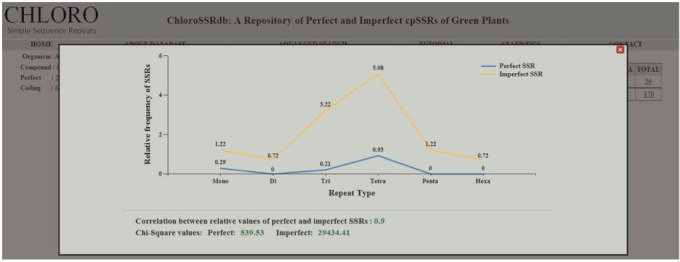
Additionally, in every species statistical analyses have been carried out to calculate relative frequency, correlation coefficient and chi-square statistics of perfect and imperfect SSRs. In accordance with the rising curiosity in SSR research, ChloroSSRdb will show to be a helpful useful resource in growing genetic markers, phylogenetic evaluation, genetic mapping, and many others. Moreover, it would function a prepared reference for mined SSRs in out there chloroplast genomes of green vegetation.
ChloroSSRdb: a repository of perfect and imperfect chloroplastic simple sequence repeats (cpSSRs) of green plants.

SpliceProt: a protein sequence repository of predicted human splice variants.

The mechanism of various splicing within the transcriptome might improve the proteome range in eukaryotes. In proteomics, a number of research goal to make use of protein sequence repositories to annotate MS experiments or to detect differentially expressed proteins.

However, the out there protein sequence repositories should not designed to totally detect protein isoforms derived from mRNA splice variants. To foster data for the sphere, right here we introduce SpliceProt, a new protein sequence repository of transcriptome experimental knowledge used to research for putative splice variants in human proteomes. Current model of SpliceProt comprises 159 719 non-redundant putative polypeptide sequences.

The evaluation of the potential of SpliceProt in detecting new protein isoforms ensuing from various splicing was carried out through the use of publicly out there proteomics knowledge. We detected 173 peptides hypothetically derived from splice variants, which 54 of them should not current in UniprotKB/TrEMBL sequence repository.

In comparability to different protein sequence repositories, SpliceProt comprises a higher quantity of distinctive peptides and is ready to detect extra splice variants. Therefore, SpliceProt gives a resolution for the annotation of proteomics experiments relating to splice isofoms.
DOR – a Database of Olfactory Receptors – Integrated Repository for Sequence and Secondary Structural Information of Olfactory Receptors in Selected Eukaryotic Genomes.

DOR - a Database of Olfactory Receptors - Integrated Repository for Sequence and Secondary Structural Information of Olfactory Receptors in Selected Eukaryotic Genomes.

Olfaction is the response to odors and is mediated by a class of membrane-sure proteins known as olfactory receptors (ORs).

An understanding of these receptors serves as a good mannequin for primary sign transduction mechanisms and additionally gives essential clues for the methods adopted by organisms for their final survival utilizing chemosensory notion in search of meals or protection in opposition to predators.

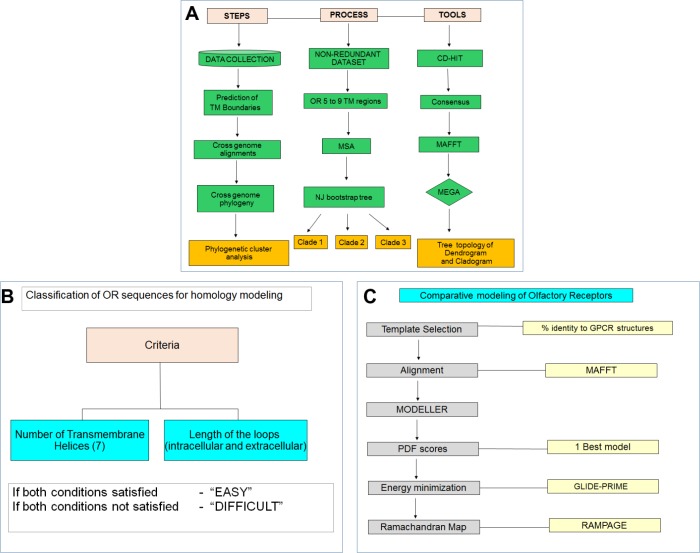
Prior analysis on cross-genome phylogenetic analyses from our group motivated the addressal of conserved evolutionary traits, clustering, and ortholog prediction of ORs.

The database of olfactory receptors (DOR) is a repository that gives sequence and structural info on ORs of chosen organisms (akin to Saccharomyces cerevisiae, Drosophila melanogaster, Caenorhabditis elegans, Mus musculus, and Homo sapiens).

Users can obtain OR sequences, examine predicted membrane topology, and receive cross-genome sequence alignments and phylogeny, together with three-dimensional (3D) structural fashions of 100 chosen ORs and their predicted dimer interfaces.

Inbred Strain Variant Database (ISVdb): A Repository for Probabilistically Informed Sequence Differences Among the Collaborative Cross Strains and Their Founders.

The Collaborative Cross (CC) is a panel of just lately established multiparental recombinant inbred mouse strains.

For the CC, as for any multiparental inhabitants (MPP), efficient experimental design and evaluation profit from detailed data of the genetic variations between strains. Such variations might be instantly decided by sequencing, however till now entire-genome sequencing was not publicly obtainable for particular person CC strains. An various and complementary strategy is to deduce genetic variations by combining two items of info: probabilistic estimates of the CC haplotype mosaic from a customized genotyping array, and probabilistic variant calls from sequencing of the CC founders.

The computation for this inference, particularly when carried out genome-huge, might be intricate and time-consuming, requiring the researcher to generate nontrivial and doubtlessly error-susceptible scripts.

To present standardized, simple-to-entry CC sequence info, we now have developed the Inbred Strain Variant Database (ISVdb).

The ISVdb gives, for all of the exonic variants from the Sanger Institute mouse sequencing dataset, direct sequence info for CC founders and, critically, the imputed sequence info for CC strains.

Notably, the ISVdb additionally: (1) gives predicted variant consequence metadata; (2) permits fast simulation of F1 populations; and (3) preserves imputation uncertainty, which can permit imputed knowledge to be refined in the longer term as further sequencing and genotyping knowledge are collected. .

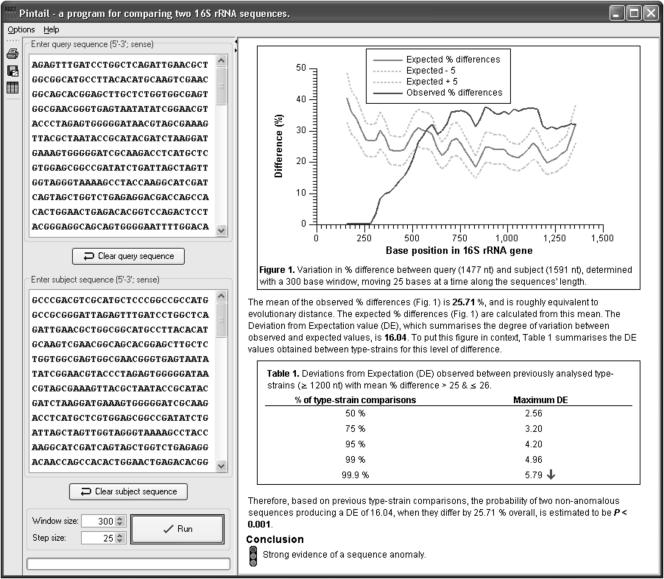
At least 1 in 20 16S rRNA sequence records currently held in public repositories is estimated to contain substantial anomalies.

A brand new methodology for detecting chimeras and different anomalies inside 16S rRNA sequence records is offered.

Using this methodology, we screened 1,399 sequences from 19 phyla, as outlined by the Ribosomal Database Project, launch 9, replace 22, and located 5.0% to harbor substantial errors. Of these, 64.3% had been apparent chimeras, 14.3% had been unidentified sequencing errors, and 21.4% had been extremely degenerate.

In all, 11 phyla contained apparent chimeras, accounting for 0.8 to 11% of the records for these phyla. Many chimeras (43.1%) had been shaped from parental sequences belonging to completely different phyla.

While most comprised two fragments, 13.7% had been composed of at least three fragments, usually from three completely different sources. A separate evaluation of the Bacteroidetes phylum (2,739 sequences) additionally revealed 5.8% records to be anomalous, of which 65.4% had been apparently chimeric. Overall, we conclude that, as a conservative estimate, 1 in each 20 public database records is possible to be corrupt.

Our outcomes help considerations lately expressed over the standard of the public repositories.

With 16S rRNA sequence information more and more enjoying a dominant function in bacterial systematics and environmental biodiversity research, it is very important that steps be taken to enhance screening of sequences prior to submission.

To this finish, we’ve got applied our methodology as a program with a simple-to-use graphic person interface that is able to operating on a variety of laptop platforms.

The program is known as Pintail, is launched beneath the phrases of the GNU General Public License open supply license, and is freely accessible from our web site at http://www.cardiff.ac.uk/biosi/research/biosoft/.

Multiple endocrine neoplasia sort 2 RET protooncogene database: repository of MEN2-associated RET sequence variation and reference for genotype/phenotype correlations.

Multiple endocrine neoplasia sort 2 (MEN2) is an inherited, autosomal-dominant dysfunction brought on by deleterious mutations inside the RET protooncogene. MEN2 RET mutations are primarily heterozygous, missense sequence adjustments discovered in RET exons 10, 11, and 13-16.

Our group has developed the publicly accessible, searchable MEN2 RET database to help in genotype/phenotype correlations, utilizing Human Genome Variation Society suggestions for sequence variation nomenclature and database content material. The MEN2 RET database catalogs all RET sequence variation related to the MEN2 syndromes, with related medical data.

Each database entry lists a RET sequence variation’s location inside the RET gene, genotype, pathogenicity classification, MEN2 phenotype, first literature reference, and feedback (which can contain data on different medical options, advanced genotypes, and extra literature references).

e MEN2 phenotype definitions had been derived from the International RET Mutation Consortium pointers for classification of MEN2 illness phenotypes. Although practically the entire 132 RET sequence variation entries initially cataloged in the database had been from literature experiences, novel sequence variation and up to date phenotypic data for any current database entry will be submitted electronically on the database web site.

The database web site additionally accommodates hyperlinks to chosen MEN2 literature critiques, gene and protein data, and RET reference sequences. The MEN2 RET database (www.arup.utah.edu/database/MEN2/MEN2_welcome.php) will function a repository for MEN2-associated RET sequence variation and reference for RET genotype/MEN2 phenotype correlations.